Final Reflection Essay
During this course I have learned how to use annotations and reviews to further enhance my essays. Through the work of the peer review, self editing, and 1 on 1’s with my instructor, I have made my essays easier to read and more concise while covering appropriate information. The peer reviewed Synthesis Essay more specifically was really helpful to me. It made me realize that I would have missed points that I would’ve never considered. It helped my essay become more complete and clear. Wherever I would elaborate too much on, or if there wasn’t enough of my feedback or opinion, my peers would help me correct and identify them. Through the use of multiple revised drafts, reviews, read throughs to double check answers, etc., I was able to perfect my essay to a college level standard. It really resonated with me that back in highschool, I would have ended up losing points for the reasons my peers pointed out. These points helped elevate my essay to the degree where I feel like I don’t recognize it or I would have never thought it could be written by me.
There were some steps I was taught in order to construct these essays in the first place, starting with examining and synthesizing sources. I used the readings assigned in class such as Amy Tan’s “Mother Tongue” and June Jordan’s “Nobody Means More to Me Than You and the Future Life of Willie Jordan” while also using my own researched articles to relate and compare sources. Now, looking back, I feel like I needed this so I can validate myself more. Being able to make your own opinion while backing it up with evidence is really useful and important since it helps validate your reasoning, especially when you can line up the sources in a way where they can build off of each other as if you had a witness backing you up in court. I used this numerous times in the Synthesizing practice assignment and of course the Synthesis Essay where I had to put these skills to the test.This taught me how to synthesize the sources to my advantage. More specifically, how to structure the paragraphs to tune to my sources and the balance between the words of the sources and my own voice. It was really important to me that I learn this since I often end up letting the sources overpower me, and it ends up almost being a book report rather than a synthesis essay. Or it would be an opinion piece based on my own words and experiences, never really having any hard facts or outside claims to compare to. Finding that balance and synthesizing efficiently allowed me to do what I couldn’t really do a couple years ago.
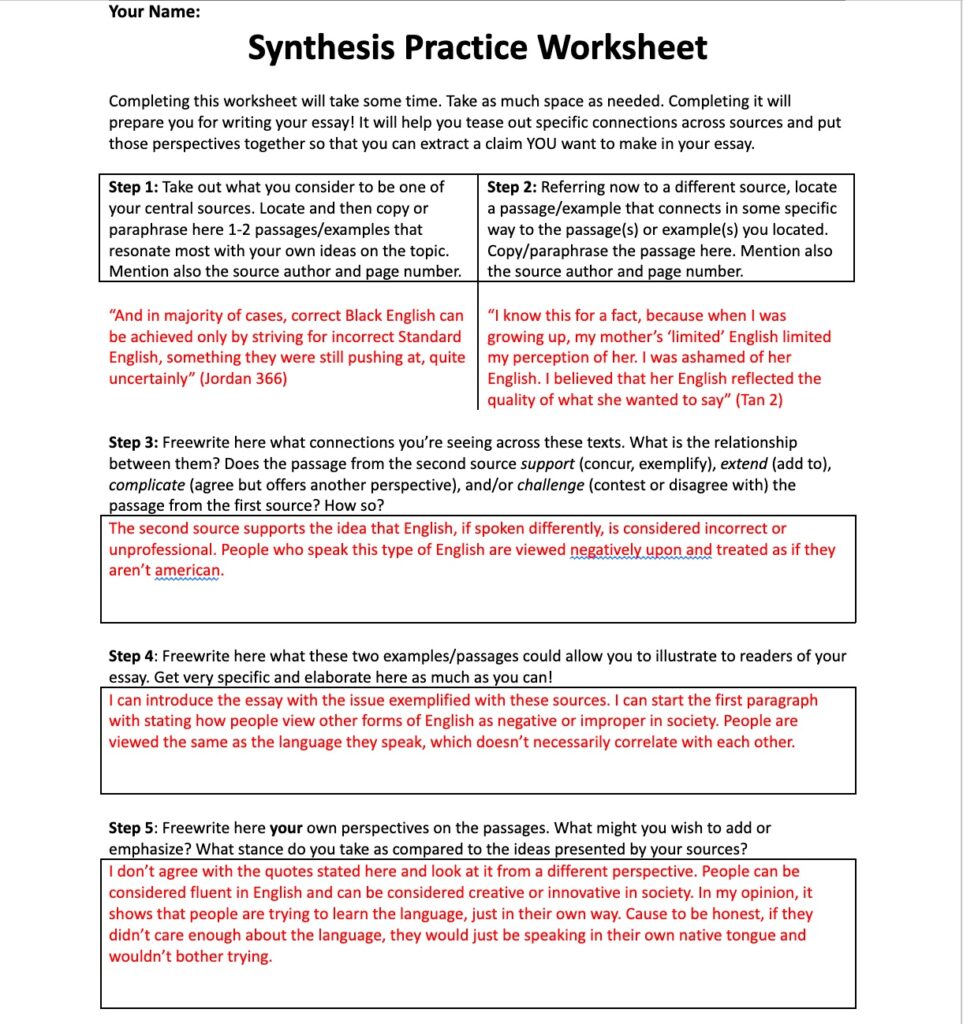
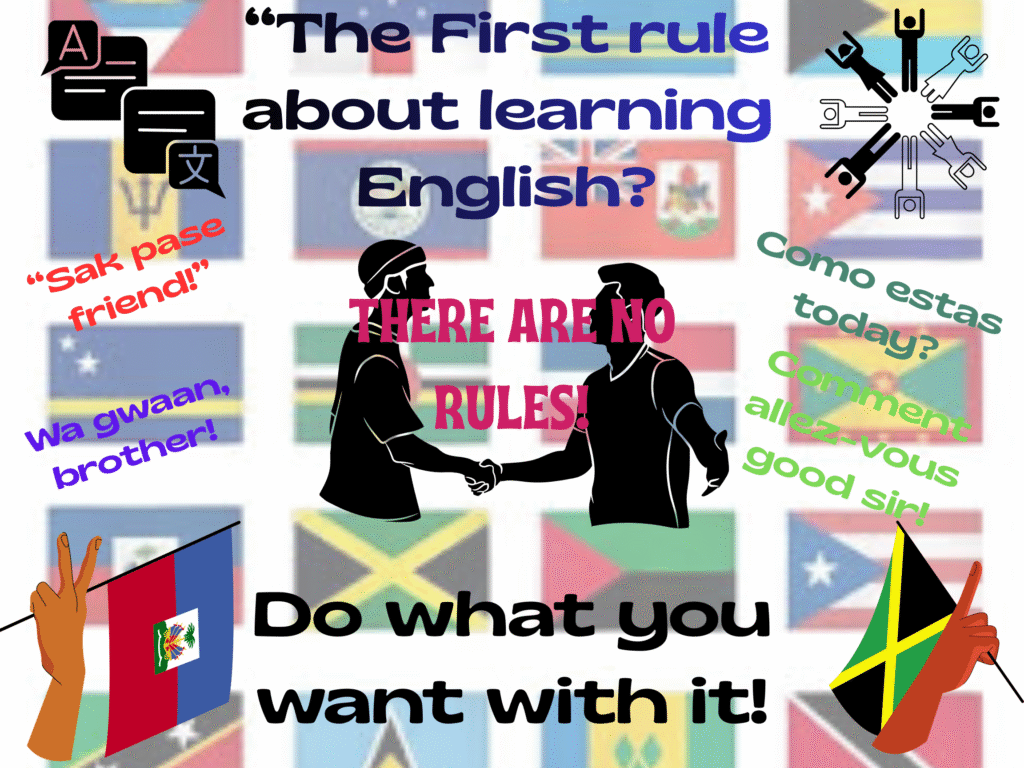
In order to complement whatever sources I used in my essay. I would also learn how to incorporate visual media in order to support my arguments. Through the use of my Translation 1 and 2 assignments, as well as my synthesis essay, I was able to create a visual representation of my argument to appeal to a wide audience. The use of it in the Synthesis essay was very eye opening to me since this would be the first ever time I decided to use anything. I would just write the essay, and wouldn’t even consider using graphs or pictures or gifs to help make my essay more eye-catching or engaging. I can feel whenever my essay feels a bit heavy in the sense where it can be very information dense without any flair to it, so they would end up being boring to read and end up being exhausting at points. The translation assignments allowed me to make my arguments entirely visual to the point where there are little to no words in it. This taught me how to expand my avenues in broadcasting my claims. Through the use of visual media, it can be more clear what I’m trying to convey to my audience, since sometimes pure facts or written claims can be easily confusing. This allows me to reach more avenues. The translation 2 assignment specifically, I used Caribbean flags as well as a mix of English and native language to show my point. That point being that there are many ways to speak and learn English, therefore you can do whatever makes you feel comfortable without the judgement of others.
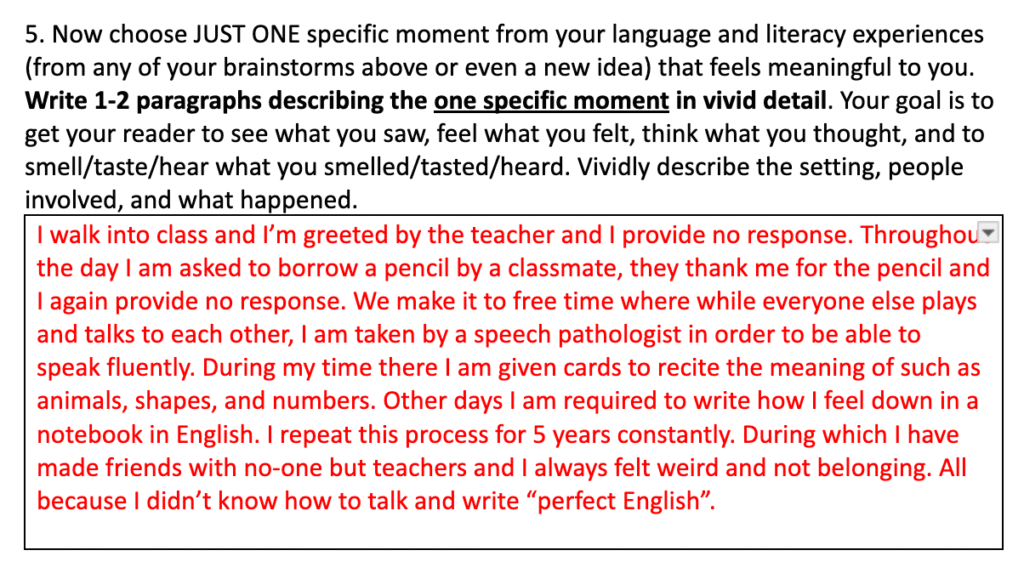
This carries onto the most important concept I learned. The fact that proficiency in English doesn’t correlate with the value of your words. I learned this from the assigned readings mentioned earlier in the essay, as well as Vershawn Ashanti Young’s essay “Should Writers Use They Own English”. These authors not only share their own experiences of discrimination due to how well they spoke English, some wrote their essays in unconventional ways to further prove their claims. Tan’s essay explains how she at first viewed her mother poorly due to how she spoke English to other people and then later changed her opinion towards it once she found out that her mother actually could speak English just as well as others, just in a different way. Jordan’s essay shows how they were creating their own form of English to show how their language can be easily interpreted as English if taken the time to learn and practice. Lastly, Young’s essay is entirely written in black slang in order to appeal to a wider audience, and to disprove critic Stanley Fish’s claim that these unconventional methods of english can’t be used in a professional setting. I used these ideas and claims vividly while brainstorming and drafting my LLN essay and synthesis essay. Through there I staked the claim that learning english is similar to processing grief, everyone goes by it differently so there is no one correct way. So why should there be a standard, why should one be viewed differently due to the fact that their English doesn’t match their status quo? My essay reflects and builds up upon that issue.

This entry is licensed under a Creative Commons Attribution-NonCommercial-ShareAlike 4.0 International license.

